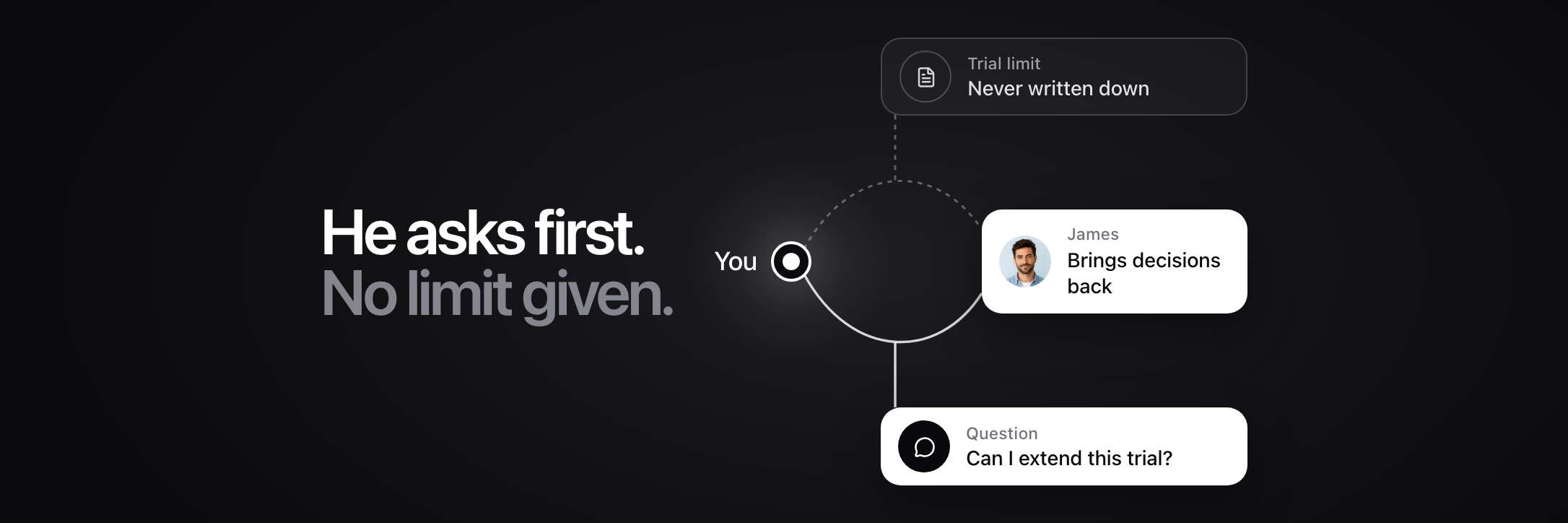
When an employee needs constant hand-holding, start with their questions. For one week, write down every question they bring you. For each one, note whether the answer was written down where they could find it, whether they could have decided it themselves if they had known the limit, and what you did: answered, decided for them or redid the work. Look for four groups: information that lives only in your head, decisions nobody told them they could make, a skill they haven't learned yet, and checks they make because a past mistake went badly. Fix the biggest group first, agree when questions come to you and look at the log again after two weeks. If the same questions keep coming once the answers are written down, the limits are clear and you have shown them the work, treat it as a performance problem.
What you'll learn
- Log a week of questions with four facts about each.
- Tell missing information, unclear limits, a new skill and fear of mistakes apart.
- Agree what they decide alone and when the rest comes to you.
When an employee needs constant hand-holding, log the questions first
This is for someone who can do the job but keeps bringing you decisions and checks that belong to their role. A new starter should ask a lot, so begin once the onboarding you planned for them is over. Tell the employee what you are doing and why: you want to find out which answers should be written down. A list kept quietly and produced later can feel like a case against them. For each question, note four things.
- 01
What did they ask?
Write the question in their words and the work it was about: “Can I give this customer a longer trial?”, not “asked about trials again”.
- 02
Was the answer written down?
Could they have found it in the tool, template or document where they do the work? If the rule lives in your head or in an old message thread, answer no.
- 03
Could they have decided?
If they had known the limit, could they have made the call themselves? Some questions belong with you: a promise to a customer, a price or anything else that commits the company.
- 04
What did you do?
Note whether you answered, decided for them, rewrote their work or took the task over. When you take the work back, they don't practise the step, and the next similar task has a reason to come back to you too.
The figure counts every meeting invite, email and chat a Microsoft 365 user receives, not questions from one colleague, and it leaves out organisations in the EU. It doesn't say how many of those interruptions could be avoided. Your own day may already look like this before one employee's questions are added. The log shows which of those questions could wait for a set time and which ones shouldn't reach you at all.
A worked example: a week of questions from one hire
Here is a hypothetical example. James joined an 18-person software company four months ago as its first customer success specialist. The founder, who used to look after customers herself, notices that he brings almost every decision back to her. For one week she writes the questions down. The five below cover every pattern in her log.
| Question | Was the answer written down? | Could he have decided? | What the founder did |
|---|---|---|---|
| “Can I extend this customer's trial by two weeks?” | No. The founder extends trials by up to 14 days without asking anyone, but never said so or wrote it down. | Yes, if he had known the limit. | Said yes. |
| “Is this reply to a refund complaint OK to send?” | Partly. A reply template sits in the shared drive, not in the help desk. | Yes. | Rewrote one sentence and sent it herself. |
| “Can I refund this customer's last month?” | No. | Yes, if he had known the limit. | Approved it. |
| “How do I set up single sign-on for this account?” | Yes, in the product docs, but he had never done it. | Not yet. It is a new skill. | Did it herself. |
| “Can I tell them the export feature ships in March?” | No. | No. Release dates are the founder's call. | Answered. This question belonged with her. |
Read down the columns. Two of the five questions depended on rules that existed only in the founder's head, and a third on a template he couldn't reach from the help desk. Three were decisions James could make once he knew the limit. One was a skill nobody had shown him. Only the release date belonged with the founder. In two cases she did the work herself, so James didn't practise either step.
They agree what changes. By Friday the founder writes two limits into the help desk notes: James can extend a trial by up to 14 days and refund up to one month's fee, and he lists both in a Friday summary. The refund reply template moves into the help desk. Next time an account needs single sign-on, James sets it up while she watches, and he does the one after that alone. Release dates stay with her. Questions that can wait go into one thread she answers at 11:00 and 16:00; a customer waiting on live chat is the exception. They will look at the log again in two weeks.
Match the questions to the fix
| Cause | What the log shows | What to change |
|---|---|---|
| An unwritten rule | The answer lived in your head, an old message or a file they didn't know about. | Add the rule to the tool or template they use for that task, and decide who updates it when the rule changes. |
| Unclear decision rights | They could have decided if they had known the limit: a discount, a refund, a deadline change. | Say what they decide alone, what they decide and tell you about afterwards, and what they bring to you first. |
| A step nobody has shown them | The answer was available, but the task was new or harder than their usual work. | Do it together the first time, let them lead the second while you watch, and leave the third to them. |
| Fear of getting it wrong | They ask for approval on work they already know how to do, for example after a mistake was corrected sharply or their work was redone. | Say which mistakes are cheap to fix and how you will respond when one happens. Then stop redoing work you would have accepted. |
Unclear decision rights need a decision from whoever sets the limits for the role, which in a small company is usually you. Write three short lists for the role: decide alone, decide and tell me, ask me first. Keep the third list short and specific. If it says “anything involving customers”, a customer success specialist has almost nothing left to decide. If you would rather keep most decisions yourself, the questions may be coming from your side of the desk; read what to do when a manager never delegates. A founder decision map helps when the same limits are missing across several roles.
Change how you answer the next question
When the next question arrives, ask: “What would you do?” If their answer is right, say so and tell them they can make that call next time without asking. If it is wrong, explain what they missed and what the rule is, so the answer covers the next case as well. Ask them to bring a proposed answer with each question from now on. You then check a decision instead of making it for them.
Agree when questions reach you. A shared thread answered at set times works for anything that can wait an hour or two. Keep an exception for work where a customer or colleague is waiting. If you reply to every message within minutes, asking you can stay quicker than looking the answer up.
Coop Profile records how a person says they like to get instructions and how often they want to check in. Use it to start that conversation and check it with them; it can't tell you whether someone is ready to work on their own.
Anxiety or a health condition may come up when you talk about the log. Hear the person out and leave any diagnosis to professionals. Before you change the role or begin a formal procedure, ask an employment specialist how to handle it.
When constant questions become a performance problem
At the two-week review, go through the new log with the employee. Where a kind of question has stopped, check the work behind it: is the person making those decisions well and finishing the tasks? If so, keep the change. A new kind of question goes through the same four checks. If the constant hand-holding continues with the fixes in place, and the work is at the level the role was hired for, tell them the issue is now their performance. Name the decisions and tasks the role must handle without you, list the help you have already given and set a period, such as a month, with a date to look at it together. Send that summary in writing after the meeting.
Sometimes the log points to a different problem. If the questions are about work nobody clearly owns, check whether the employee performance problem is really unclear responsibility. If the person now works alone and the work keeps coming back wrong, use the log for an employee who keeps making mistakes. If the questions stopped along with their interest in the work, read about a checked-out employee instead.