When an employee keeps making mistakes after you have pointed them out, stop repeating the feedback and look at the mistakes side by side. Write down the last three to five. For each, note the step where it happened, whether the correct standard was written down where the person works, whether anything checked the work before it went out and what else they were doing at the time. The pattern points to the likely cause: missing information, a missing check, interruptions or too much work, or a skill they haven't learned yet. Confirm it with the employee, then agree one change and a date to review it. If the same mistake comes back once the information, the check and the time are in place, it has become a performance problem, and you should say so.
What you'll learn
- Log the last few mistakes with four facts about each.
- Match the pattern to a fix: information, a check, time or training.
- Know when repeated mistakes have become a performance conversation.
When an employee keeps making mistakes, start with a log
This approach is for honest errors in work the person owns: invoices, orders, reports, client files, code they ship. If someone skips a rule you both agreed on deliberately, that's a conduct conversation, not a mistake log. For each mistake, answer four questions.
- 01
Where did it happen?
Name the step in the work, not a trait of the person: “applying the client's discount”, not “careless with invoices”.
- 02
Was the right answer written down?
Could the person have found the correct price, rule or instruction quickly, in the place where they do the work? If it lived only in an old email thread or a colleague's memory, answer no.
- 03
What checked the work?
Did anyone or anything look at it before it reached the customer or the next team? If the first check was a complaint, write that down.
- 04
What else was happening?
Note the day, the deadline and any other job they were covering at the time, such as a shared inbox, the phones or a new joiner's questions.
Fill in the log with the employee rather than about them. Show the list and ask what they remember about each mistake. They may know exactly where the information was hard to find or what pulled them away mid-task. The log describes the work, and you are both looking for the step where it goes wrong.
The figure covers all U.S. employees, not small companies, and it doesn't measure mistakes. Use it to test “they should have known” before you rely on it. The second question in the log does that test for one piece of work.
A worked example: three wrong invoices
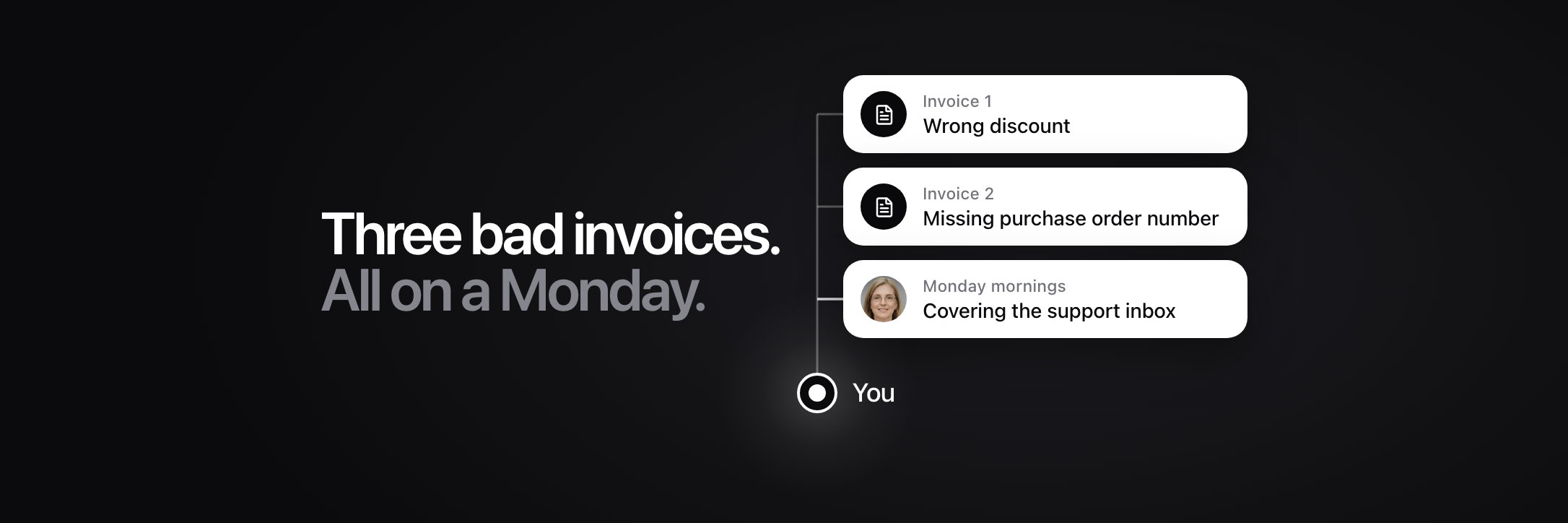
Here is a hypothetical example. Serena is the operations coordinator at a 14-person design studio and sends client invoices. Over three weeks, three invoices go out wrong. Her manager has mentioned each one, and Serena has apologised each time. Before the next conversation, the manager writes the log.
| Mistake | Where it happened | Was the standard written down? | What checked it? | What else was happening |
|---|---|---|---|---|
| Wrong discount: 10% instead of 15% | Applying the client's discount | No. The 15% was agreed in an email thread last year. | Nothing. The client noticed. | Monday morning, covering the support inbox |
| Missing purchase order number | Adding the client's references | No. The client's rule was in an onboarding email. | Nothing. The client's accounts team returned it. | Monday morning, covering the support inbox |
| Wrong discount for another client | Applying the client's discount | No. The terms were in the signed proposal. | Nothing. The client noticed. | Monday morning, support inbox and a new joiner's questions |
Read across the rows. Two of the three mistakes happened at the step where client-specific terms apply, and the third at the step next to it. All three happened on Monday mornings while Serena was also answering the support inbox. None of the terms were in the billing tool, and nothing checked an invoice before the client did. A talk about attention to detail alone would not necessarily address any of these conditions.
The manager and Serena agree three small changes. Serena copies each client's discount and purchase order rule into one field in the billing tool by Friday. Invoices move to Tuesday morning, and a colleague covers the inbox for that hour. Before sending, Serena compares the discount and reference on each invoice with that field. They will look at the log again after the next two invoice runs.
Match the pattern to the fix
| Cause | Signs in the log | What to change |
|---|---|---|
| Missing information | The standard lived in someone's head, an old email or a file the person didn't know about. | Put it where the work happens: a field, a template or a short written rule. Name who keeps it current. |
| No check | The first person to notice was the customer or the next team. | Add one check at the risky step: a short list the person runs before sending, or a second look for costly items only. |
| Interruptions or too much work | Mistakes cluster at busy times, near deadlines or while the person covers another duty. | Protect a block of time for the error-prone step, move the competing duty for that block or take work away. |
| A skill not yet learned | The information was there, nothing was rushed, and the mistakes are in new or harder work. | Show the step once, watch them do the next one and check the first few together. |
Training is the fix when the log points to the last row. If the price sits in an email thread, make it reachable where the person works, and add training only if a skill is also missing. A checklist helps only if someone has time to run it. Some logs show several causes at once, as Serena's did. Fix the one that appears in most rows first.
The study used a computer task in which participants had to keep their place in a sequence of steps, and the errors it counted were losing that place. Other kinds of error didn't rise. The participants were students in a lab, not employees in an office, so the study can't tell you that interruptions caused your employee's mistakes. Treat it as a prompt to check the last column of the log before you blame attention. If the log shows the person is covering too much, the problem may be the team's load rather than one person. The guide for when the team has too much work covers that case.
Talk about the mistakes without making it about character
You could open with: “I've written down the last three invoice mistakes. I'd like to go through them with you and find where they come from.” Then ask about each one: “What was happening when this went out? Where did you look for the discount?” Avoid “you need to be more careful”. When someone keeps making mistakes after earlier feedback, that phrase doesn't tell them what to do differently on Monday.
End with something specific: what changes, who does it, by when and when you will look at the log again. Write it down in a short message after the meeting. The same structure works for giving feedback to employees in general: describe the work, its effect and the next step, not the person's character.
If the employee mentions a health condition or a difficulty outside work, listen and don't try to diagnose it. Take advice from an employment specialist before you change their duties or start a formal process.
Current working preferences in Coop Profile can help you ask how the person prefers to receive instructions and when they work best without interruption. Confirm them with the person. A profile does not judge the quality of their work or explain a mistake.
When repeated mistakes become a performance problem
At the review date, add any new mistakes to the log. Where the agreed mistakes stopped, keep the change. A new kind of mistake goes through the same four questions; it may be the next gap in the same process. If the person keeps making mistakes of the same kind with the fixes in place, it is time for a performance conversation. Tell the person what standard they are missing, what support you have already given, what you expect over a set period and when you will review it. Put that in writing.
Before you start that conversation, check that the work is clearly theirs; an employee performance problem can turn out to be unclear responsibility. If the person insists nothing is wrong, the guide to an underperforming employee who says everything is fine covers that conversation. If the problem is late work rather than wrong work, read what to agree when an employee keeps missing deadlines instead.