Product

Cooperly is a calmer product system for founders, managers, and team leads who need better people context in the middle of real work.

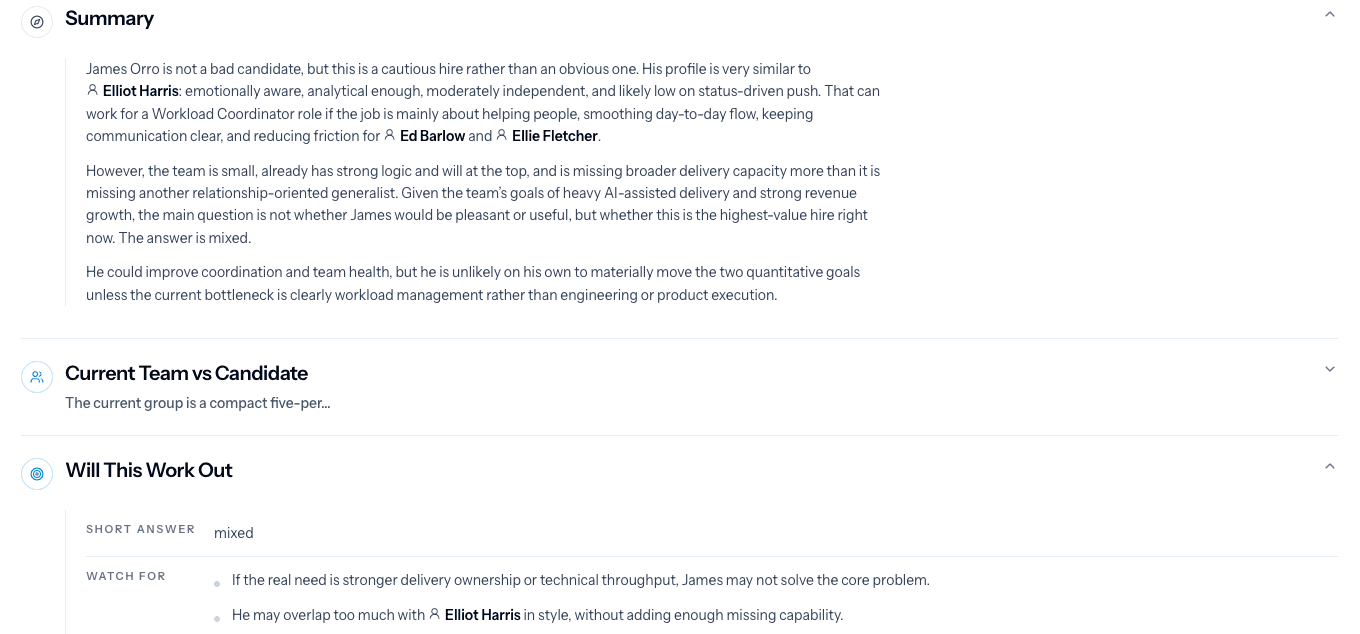
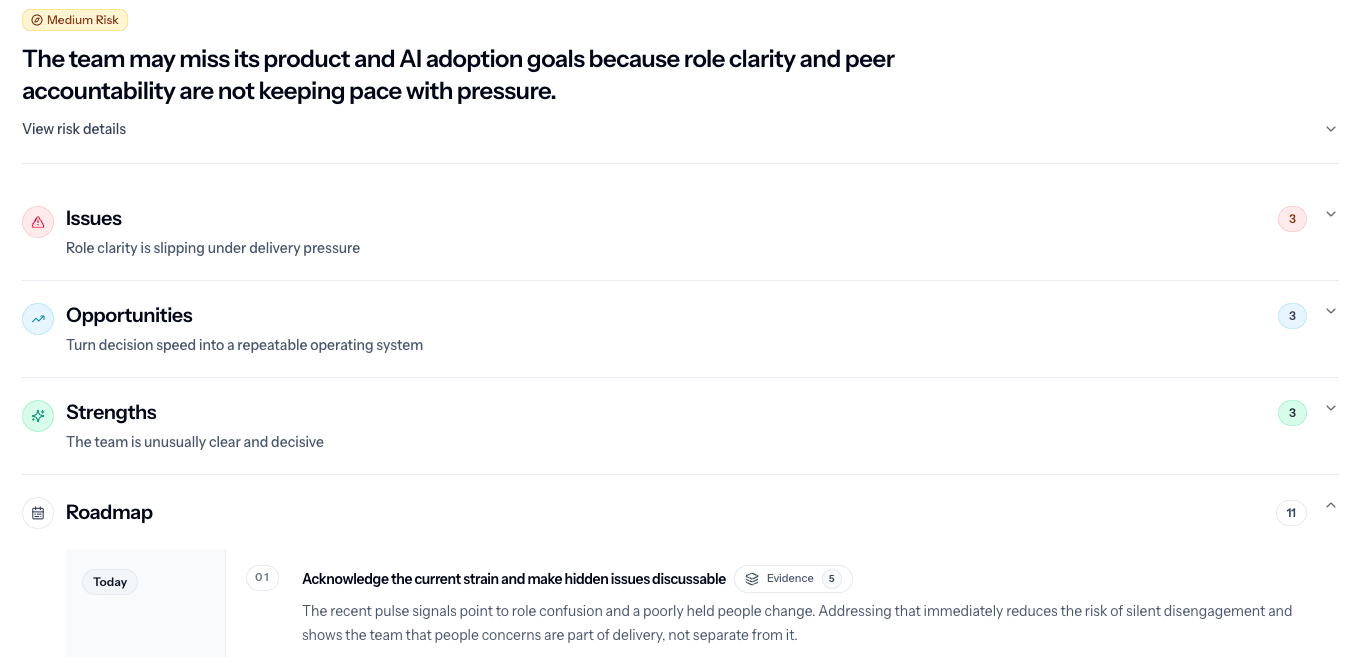
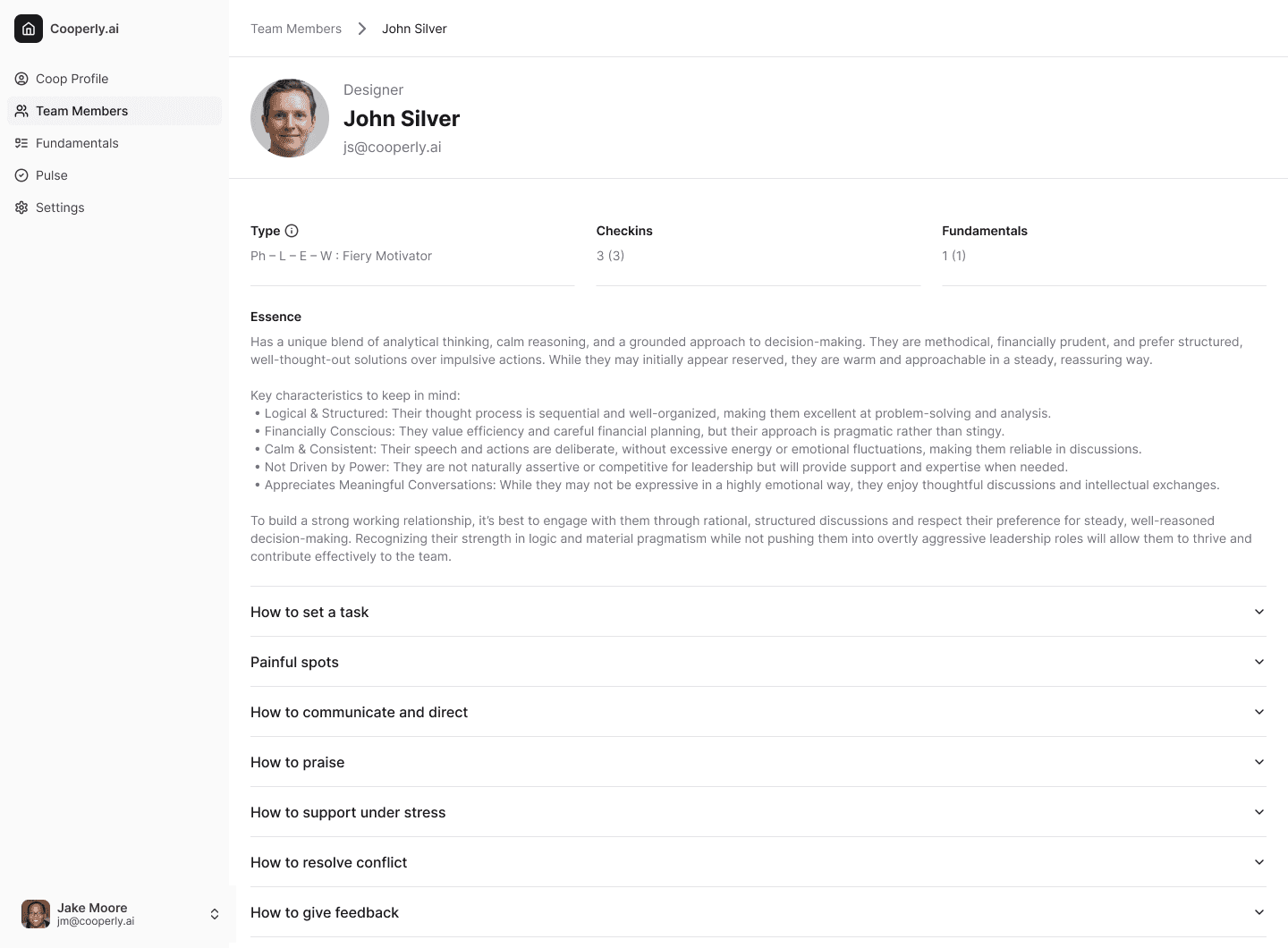
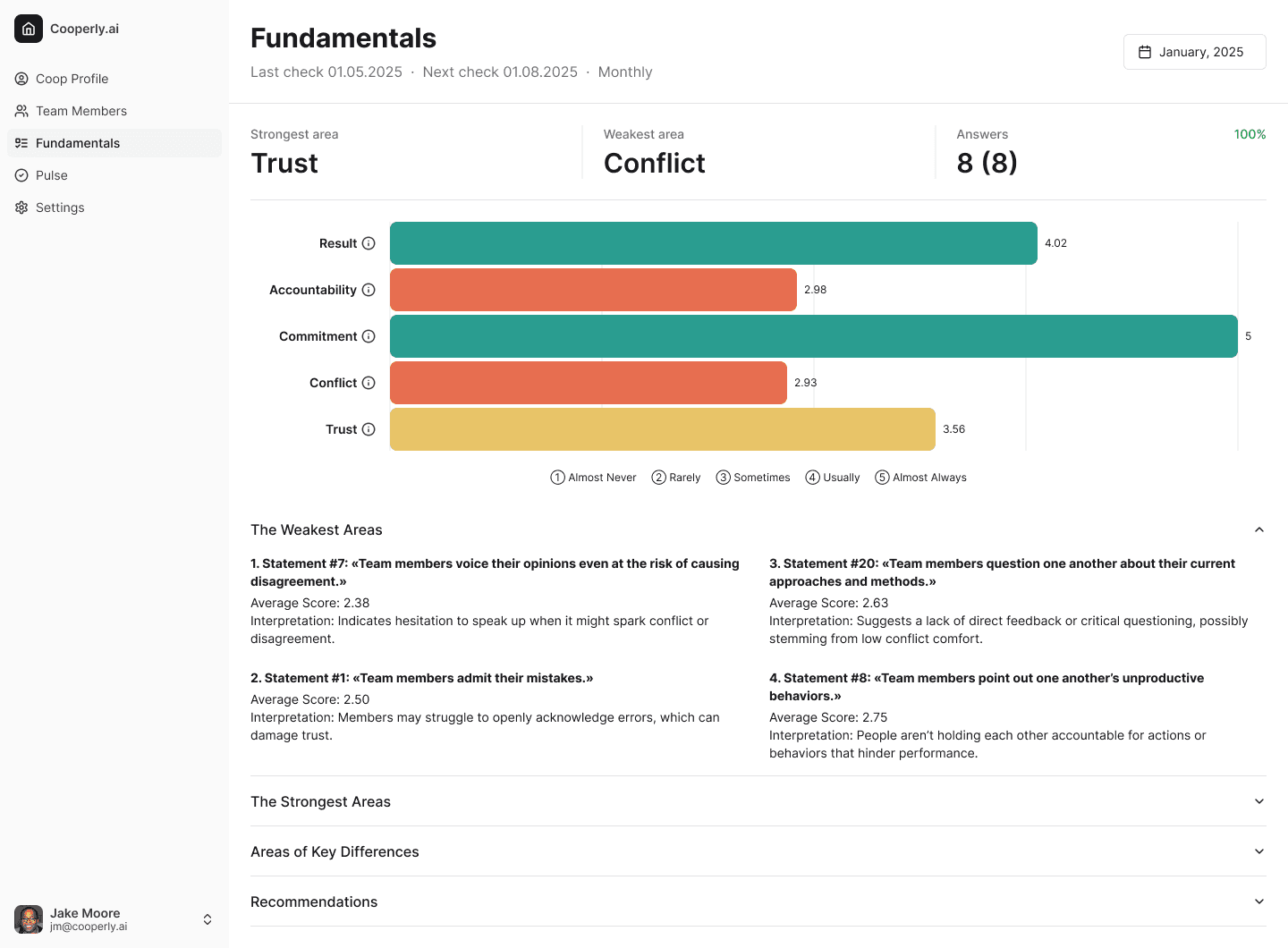
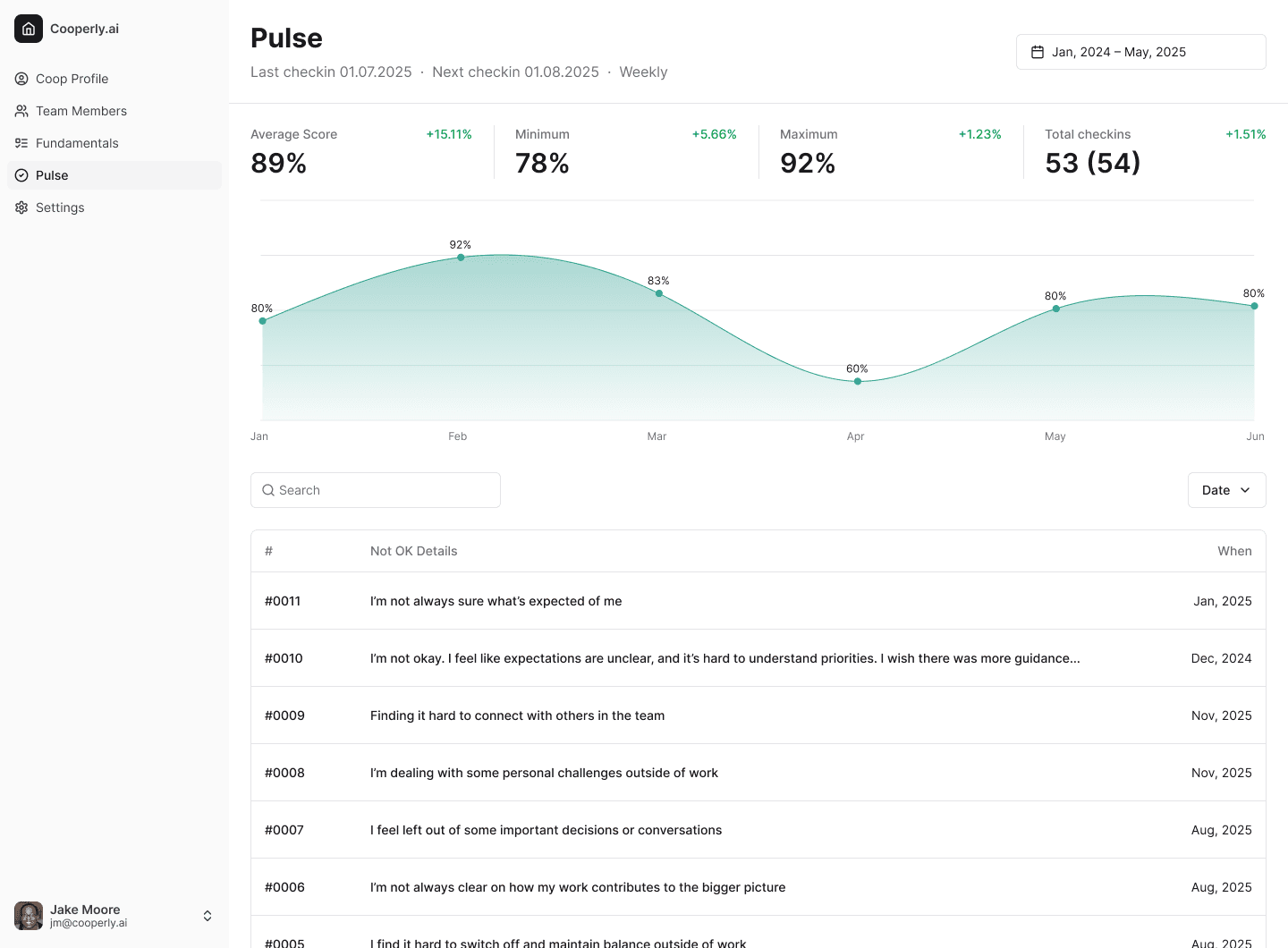
The product is built around five connected modules: one overview surface, one working-manual layer, one weekly signal layer, one deeper team review, and one hiring context layer.

See the modules together

The product works best as one operating loop, not as five disconnected pages.

High risk

Decisions and priorities still flow through too few people.

Today2
01

Freeze one shared format for feedback and revisions

Evidence3
The team needs one cleaner comment path immediately so work stops getting reopened through scattered clarification.
Suggested owner

Priya Dawson

Why this owner

She can make the rule practical enough to use this week instead of turning it into process theatre.

Why it matters

The team needs one cleaner comment path immediately so work stops getting reopened through scattered clarification.
02

List the active work that is already in the red zone

Evidence3
The team needs one honest view of overload before it can reduce it.

Suggested owner

Serena Holt

Why this owner

She is best positioned to collect the practical signal quickly and turn it into a visible decision.

Why it matters

The team needs one honest view of overload before it can reduce it.
This week2
01

Publish the decision matrix for what escalates and what does not

Evidence3
This is the fastest way to relieve the approval bottleneck without pretending the team can decentralize everything overnight.

Suggested owner

Adrian Cole

Why this owner

He can define the new boundaries without creating confusion about the final escalation line.

Why it matters

This is the fastest way to relieve the approval bottleneck without pretending the team can decentralize everything overnight.
02

Name pilot owners for three recurring operating lanes

Evidence3
A small pilot is the lowest-risk way to prove the team can carry more middle ownership.

Suggested owner

Serena Holt

Why this owner

She can help choose lanes that are real enough to matter but contained enough to learn from quickly.

Why it matters

A small pilot is the lowest-risk way to prove the team can carry more middle ownership.
This month2
01

Run one weekly status ritual across active work

Evidence3
A visible weekly rhythm is the simplest way to raise transparency and catch blocked work earlier.

Suggested owner

Priya Dawson

Why this owner

She can keep the ritual short, legible, and close to decisions instead of status theatre.

Why it matters

A visible weekly rhythm is the simplest way to raise transparency and catch blocked work earlier.
02

Run a focused round of role and growth conversations

Evidence3
This will reduce uncertainty about ownership and help the team see how its potential is meant to be used.

Suggested owner

Adrian Cole

Why this owner

He can connect daily role clarity and longer-term growth without splitting them into separate tracks.

Why it matters

This will reduce uncertainty about ownership and help the team see how its potential is meant to be used.
This quarter2
01

Build a lightweight middle layer for recurring coordination and quality calls

Evidence3
Without this, the team will stay trapped between high standards and low scalability.

Suggested owner

Adrian Cole

Why this owner

He is the natural sponsor for turning pilot ownership into a durable operating layer.

Why it matters

Without this, the team will stay trapped between high standards and low scalability.
02

Add capacity control and early-risk escalation to the operating rhythm

Evidence3
Even better roles and cleaner feedback will not hold if overload continues to surface after the team has already absorbed the cost.

Suggested owner

Serena Holt

Why this owner

She can connect practical pacing, risk visibility, and cross-team follow-through into one usable loop.

Why it matters

Even better roles and cleaner feedback will not hold if overload continues to surface after the team has already absorbed the cost.

Overview gives leaders one calmer first screen for the current state of the team. Scan the main signals, spot where attention is needed, and decide where to go deeper before small issues gather momentum.